
Review · OSAKA
Osaka: Deep Food Tour and Bar Hopping in Namba
Osaka’s famous eat until you drop spirit makes most sense in Namba, where bright signs, narrow lanes, small bars, and busy food streets crowd together. This tour takes you past the familiar takoyaki and okonomiyaki to dishes such as doteyaki and chiritori hotpot, with stops at local places along the way.
I like the small-group or private format, which gives your guide room to adjust dishes to your tastes. I also like the mix of food and place: you get the Glico sign, Hozenji Temple, and backstreet Namba rather than sitting in one restaurant all evening. The main catch is that the $48 price covers the guide only, so you must budget extra for every food and drink stop.
Key points to know before booking
- Three food stops give you a chance to try more than Osaka’s best-known flour-based dishes.
- Hozenji Temple offers a quiet, atmospheric pause in the middle of Namba’s commercial streets.
- The Glico sign provides the classic Osaka photo at the end of the route.
- Food and drinks cost extra, unless you select an expense-included private or group option.
- Vegetarian requests can be accommodated, based on the food preferences handled on the tour.
- Private and small-group choices work well for families, couples, and eaters with specific needs.
Eating your way through Namba
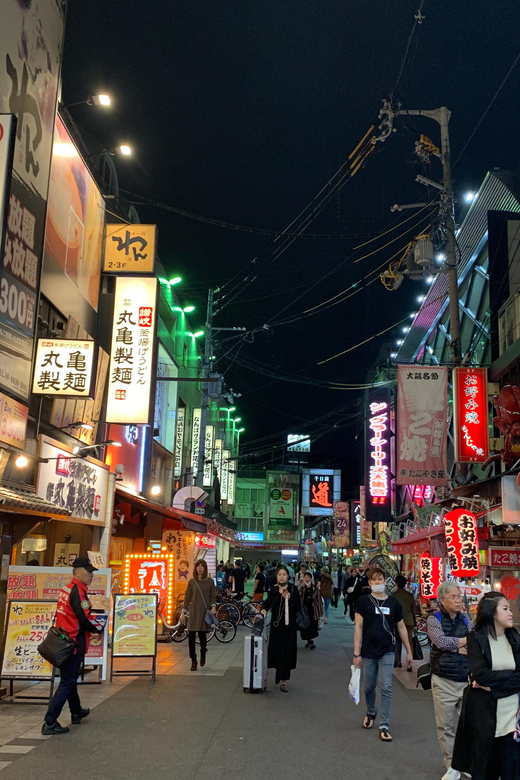
Namba is a good place for a food walk because the district changes character every few minutes. One moment you are under giant signs and surrounded by shoppers. The next, you are on a side street with a tiny bar or an old temple tucked between modern buildings.
This tour uses that contrast well. It is not only a meal with a guide. You move through the district, stop for photographs, learn what to order, and eat in several places. That makes the evening feel more like an introduction to Osaka’s food culture than a single restaurant reservation.
The route lasts about two to three hours. That is long enough for several tastes without taking your whole night. You should still arrive hungry, since the schedule includes three food-focused stops of about 40 minutes each. The pace may feel full for anyone who prefers a slow, formal dinner.
Osaka is often linked with okonomiyaki and takoyaki, both made with flour-based batter. Those dishes are worth trying, but the city’s food traditions go further. Your guide may introduce you to doteyaki, a simmered dish, or chiritori hotpot, whose name refers to a dustpan shape. Exact dishes depend on your preferences, restaurant availability, closing days, and other practical matters.
That uncertainty is part of the experience, but it also means you should not book with one fixed dish in mind. Think of this as a guided sampling of Namba rather than a guaranteed menu.
More Bar Hopping Tours in Japan
- Tokyo Bar Hopping Tour in Shinjuku (All-You-Can-Drink + Dinner)
★ 5.0 · 3,587 reviews - Shibuya Meltdown Nightlife Tour: All-You-Can-Drink Bar Hopping
★ 5.0 · 1,058 reviews - Osaka Bar Hopping Night Walking Tour in Namba (3 bars, 6 tastes)
★ 5.0 · 958 reviews
Meeting near Osaka Shochikuza
You may start at Osaka Shochikuza or the Osaka Shochikuza Building, depending on the option you book. These are central Namba meeting points, useful for anyone already exploring Dotonbori and the surrounding shopping streets.
The exact meeting arrangement can vary, so check your booking details carefully. The activity is offered with an English or Japanese-speaking guide. Specific guide names are not provided, but the format lets you ask questions and explain what you eat, avoid, or want to try.
If you have dietary preferences, tell the operator when booking and remind the guide at the start. One tour was adjusted successfully for vegetarian food, with plenty of suitable choices available. That is a useful sign for plant-based eaters, though you should still confirm your needs rather than assume every stop will offer a full vegetarian menu.
Families can also benefit from the flexible format. A private tour was tailored around a 10-year-old child, which suggests that the guide can adjust the food choices and pace for younger eaters. A private booking costs more than the listed shared price, but it can make sense if your group has children or mixed food preferences.
The opening photo stop and Osaka’s famous sign
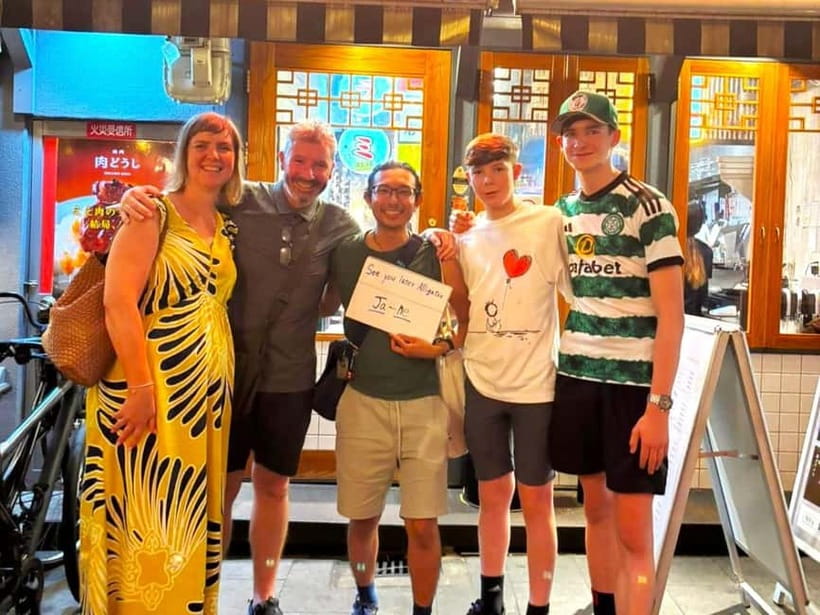
The first sightseeing stop is a photo opportunity lasting about 10 minutes. The route ends at the Glico sign, Osaka’s best-known neon landmark, so you may get your classic running-man picture either as part of the route or at the final drop-off point.
The sign matters less as a work of art than as a marker of place. It tells you that you are in the heart of Dotonbori, the part of Namba most associated with huge advertisements, food displays, and night crowds.
Keep your expectations sensible. This is a short photo stop, not a long guided explanation of the district. You will have time to take pictures, get your bearings, and continue. If you want a quiet photograph, the area can be challenging at busy times, and the tour does not promise a private viewing spot.
The two listed drop-off choices are both at the Glico sign area. That is convenient if you want to continue eating, shopping, or walking around Dotonbori after the tour.
A first local bar and regional food
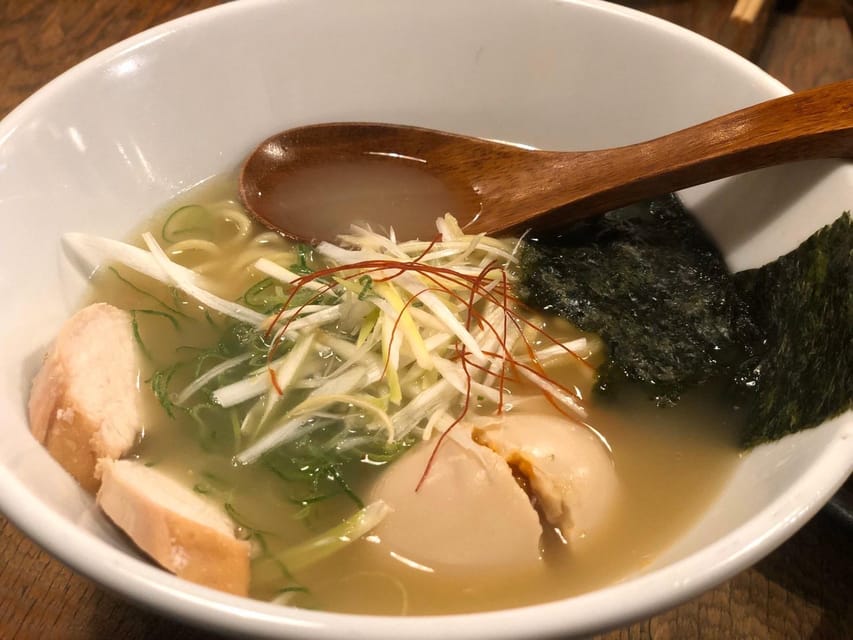
The first food stop lasts about 40 minutes at a local bar. This is where the tour begins to move away from the obvious tourist checklist.
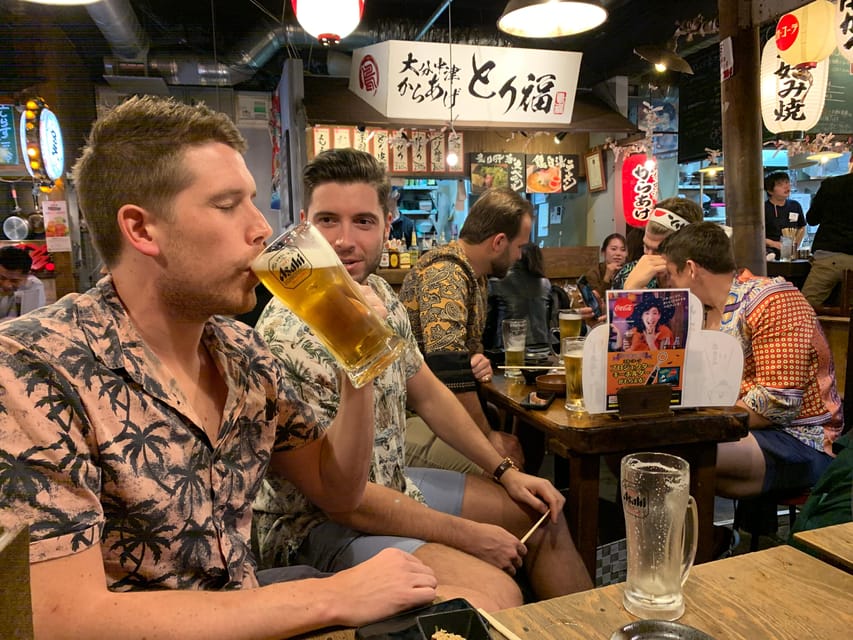
A bar setting can be a useful introduction to Osaka’s everyday food culture because smaller venues often focus on a few dishes rather than a long restaurant menu. You may receive help choosing food, understanding local specialties, and deciding how much to order at each stop.
The supplied details do not promise one specific bar or a fixed menu. Restaurants can change because of seat availability, closing days, and personal preferences. That is important if you want a particular address. The advantage is flexibility. Your guide can work around what is open and what suits your group.
Food and drinks are not included in the basic $48 price. At each stop, you pay for what you order. This can be good value if you want control over the bill, especially if you eat lightly or do not drink alcohol. It can cost more than expected if you order freely at three stops.
Ask your guide about portion sizes before ordering. With food at the first bar, another restaurant meal, and a final bar stop ahead, pacing yourself is wise.
More Food and Drink Crawls in Japan
- Tokyo: Shinjuku Bar Hopping with All-You-Can-Drink & Dinner
★ 4.9 · 440 reviews - Hiroshima Izakaya Food and Drink Night Tour
★ 5.0 · 297 reviews - Sapporo Bar Hopping Food Tour
★ 5.0 · 232 reviews - Tokyo: Shinjuku Food Tour Highlights (Best Eats)
★ 5.0 · 100 reviews
Hozenji Temple, a quiet turn in the route
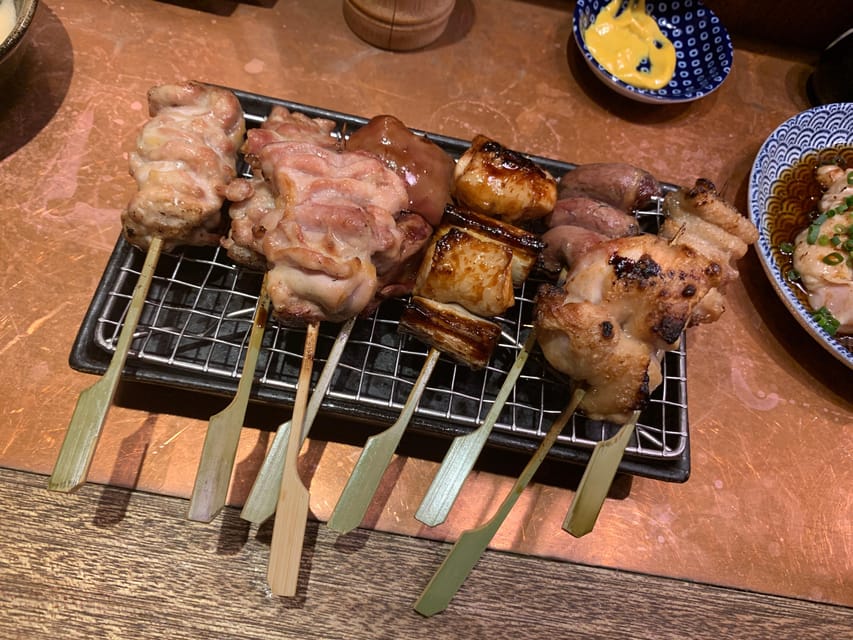
The walk to Hozenji Temple lasts about 10 minutes, with around 20 minutes set aside for sightseeing at the temple area. This is one of the best parts of the route because it breaks up the eating and gives you a different view of Namba.
Hozenji sits in the middle of a highly commercial district, yet the temple offers a much calmer mood. The contrast is the point. You move from signs, shops, and food streets into a small religious space that feels removed from the surrounding noise.
The stop is not a long temple visit or a full historical tour. It is a short look at an important local place within the Namba walking route. Your guide can provide context, while you have time to pause and take in the setting.
This stop also makes the tour more worthwhile for people who do not want a food crawl alone. You are not just moving from plate to plate. You are seeing how religious spaces, old lanes, and modern entertainment districts share the same small area.
Wear comfortable shoes. The tour includes several walks between food stops, and Namba’s streets can be crowded. The total walking distance is not stated, so anyone with mobility concerns should ask the operator for current route details before booking.
A restaurant stop for Osaka specialties
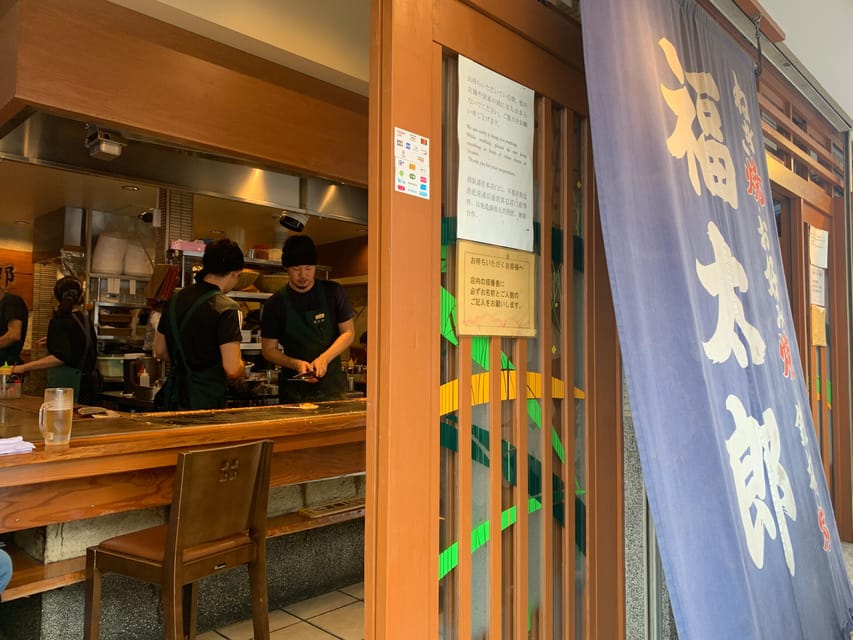
The second food stop is at a local restaurant and lasts about 40 minutes. This is likely the point where your guide can introduce a more substantial regional dish, such as doteyaki or chiritori hotpot, depending on the restaurant and your preferences.
Doteyaki is a good example of why a local guide helps. It is less famous outside Osaka than takoyaki, yet it gives you another way to understand the city’s comfort-food traditions. Chiritori hotpot offers a different experience again, with a shared pot and a dish name that reflects its dustpan-like shape.
The tour description makes clear that Osaka’s food is not only flour-based konamono. That matters because many first-time visitors spend their entire food budget on okonomiyaki and takoyaki. Those staples are still possible, but this stop encourages you to try something less predictable.
If you are traveling with a child or someone who dislikes strong flavors, speak up early. The guide can tailor the route and dishes, but only if your preferences are clear. The private tour format is especially useful for this kind of adjustment.
Again, do not assume the restaurant or dish is fixed. The operator may change the stop due to availability, closing days, or what your group wants. I see that as a practical strength, though it makes the tour less suitable for someone seeking a guaranteed restaurant experience.
The final bar and the value of three stops
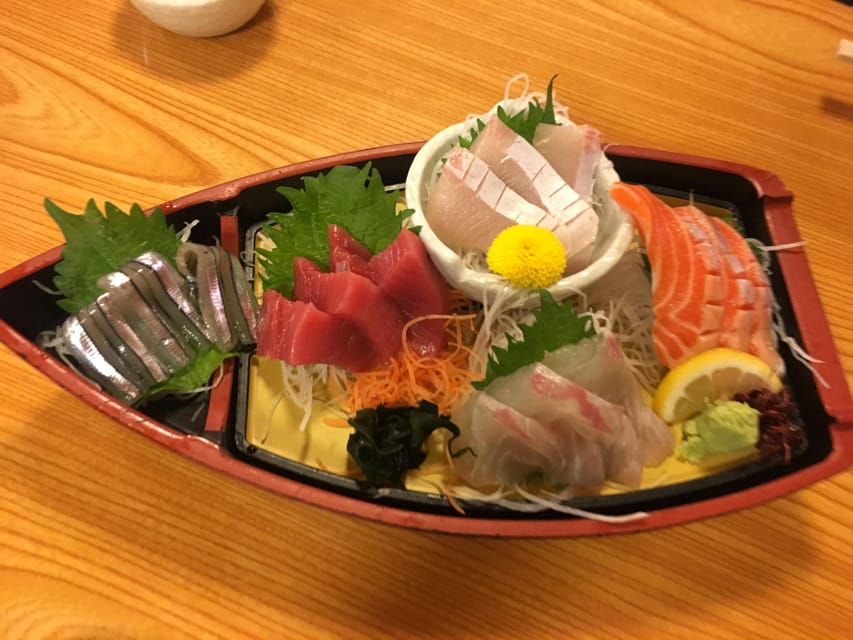
The last stop is another local bar, planned for about 40 minutes. By this point, you will have seen the district, visited Hozenji, and eaten at two earlier stops. The final bar gives you one more chance to try a regional specialty or return to a type of food you enjoyed.
Three food stops create variety, but they also make the cost harder to predict. The guide fee is $48 per person, while food and drinks are separate. A private or expense-included option is available if you want a clearer arrangement, but you need to select that option when booking.
For comparison, the basic tour price buys you more than restaurant directions. You are paying for a guide who connects the places, helps with ordering, handles the language gap, and adjusts the evening around your interests. That is useful in a district where small venues may have limited English information.
Still, I would not call the $48 a complete dinner price. Treat it as the cost of access and guidance, then add a separate food budget. If you are comfortable choosing dishes on your own, you may find it cheaper to eat independently. If you want to sample several local foods without researching every stop, the guide fee can be worthwhile.
Drinking is optional. You can order only food, ask about nonalcoholic choices, or tell the guide you want a quieter, meal-focused evening. The available information confirms food preference adjustments but does not promise a specific drink selection.
What the private option changes
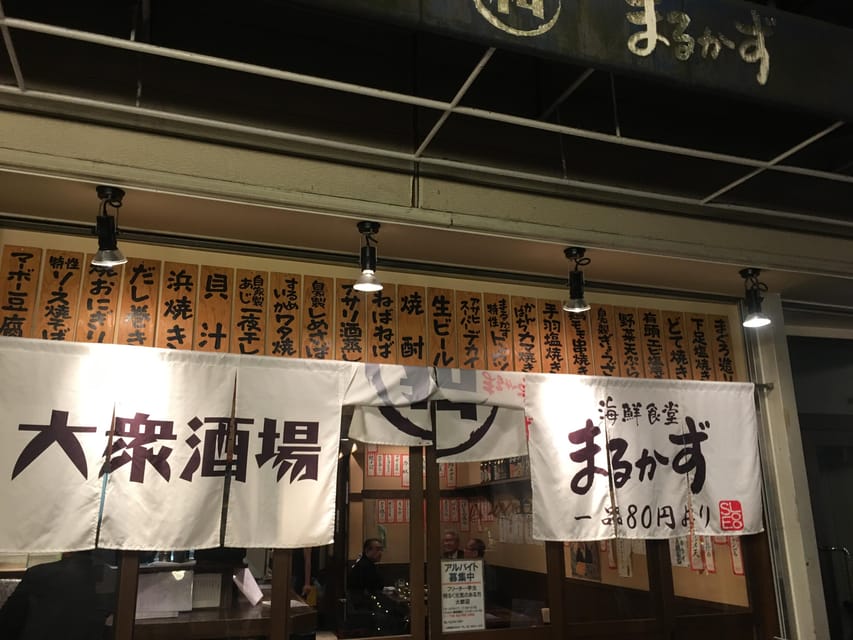
The standard experience can be private or arranged in a small group. This choice affects the feel of the evening.
A shared small group may be a good match if you like meeting other food-minded people and want the listed price to remain your main expense. A private tour gives you more control over timing, food choices, and the needs of your own group.
The private format is particularly useful for families. One 10-year-old was included in a customized route, showing that the guide can adapt the food stops rather than treating every group exactly alike. Vegetarian eaters also have a reason to consider this format, since a private guide can focus more closely on suitable choices.
The tradeoff is price. The $48 figure applies to the advertised per-person experience, while the expense-included private or group options have different booking terms. Check the exact option before paying so you know what is included.
Who will enjoy this Namba food walk
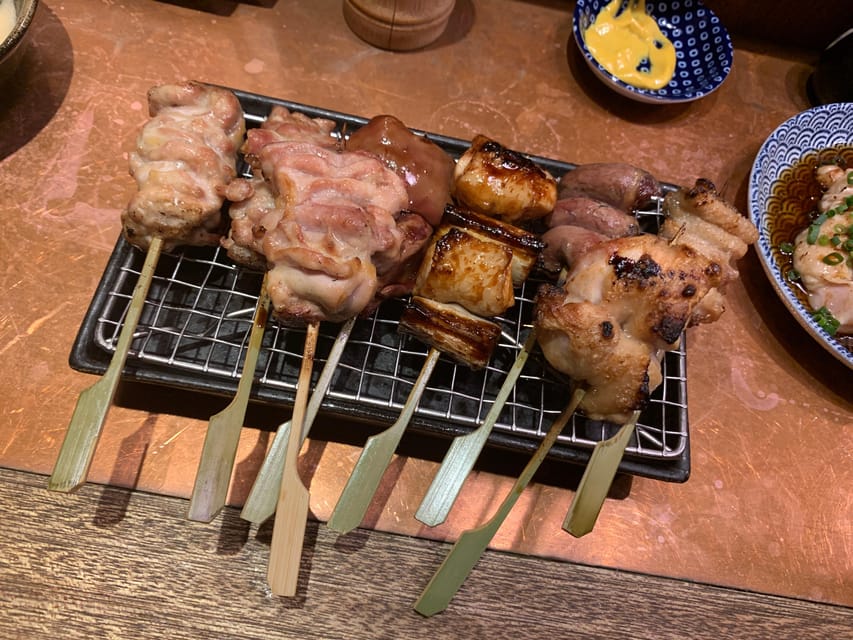
I would recommend this tour to you if you want a first taste of Osaka food without spending hours studying menus and restaurant locations. It suits couples, small groups, and families who want a local guide to connect the food with the streets around Dotonbori.
It is also a good choice for vegetarians, provided you state your needs in advance. The tour can offer plenty of vegetarian options, but the route is not presented as a dedicated vegetarian tour.
You will get the most from it if you are curious and flexible. The exact restaurants may change, and the menu is not fixed. That is a poor fit if you need a guaranteed venue, a precise dish list, or a carefully paced formal dinner.
The tour may be less suitable for anyone who dislikes crowded entertainment districts, bar settings, or multiple food stops. Namba is not a quiet neighborhood at night. It is lively, bright, and often busy, which is part of its character but not everyone’s idea of a relaxing meal.
Practical details that affect your evening
The tour takes two to three hours, with starting times available according to the date you choose. The route includes a 10-minute photo stop, a 20-minute sightseeing stop at Hozenji, a 10-minute walk, and three food stops of about 40 minutes each.
Food and drinks are excluded from the basic booking. Bring a separate budget and remember that ordering at three places can add up. If you prefer to settle costs in advance, choose the private or expense-included group option.
The guide speaks English or Japanese. Cancellation is free up to 24 hours before the activity for a full refund, and you can reserve now and pay later. These terms help if your Osaka schedule is still changing, but they do not remove the need to check the meeting point for your chosen option.
You finish at one of two drop-off points near the Glico sign. That puts you in a useful position for continuing through Dotonbori, though the activity itself does not include further sightseeing after the final stop.
Should you book this Osaka food tour?
Book it if you want guided access to several Namba food stops, prefer a flexible route, and like the idea of pairing local dishes with Hozenji Temple and the Glico sign. The strongest reasons are the adaptable private format, the range of regional food, and the help with vegetarian or family preferences.
Skip it if you want one fixed restaurant, a fully prepaid dinner, or a quiet evening away from crowds. At $48 before food and drinks, it is best viewed as a guided food walk rather than an all-inclusive meal.
For most first-time visitors who want to understand why Osaka is called the nation’s kitchen, this is a practical introduction. Just arrive hungry, keep your menu expectations open, and budget for the plates beyond the guide fee.
FAQ
How long does the Osaka Namba food tour last?
The tour lasts approximately two to three hours.
Where does the tour start?
There are two listed starting options: Osaka Shochikuza and the Osaka Shochikuza Building. The meeting point may vary according to the option booked.
Where does the tour end?
The tour has two drop-off options near the Dotonbori Glico sign.
Are food and drinks included in the $48 price?
No. Food and drinks are not included in the basic price. You can select a private tour or expense-included group option if you want those costs handled as part of the booking.
What food can I try?
Possible regional dishes include okonomiyaki, takoyaki, doteyaki, chiritori hotpot, and other local specialties. The exact dishes and restaurants can change according to availability, closing days, and your preferences.
Is the tour available in English?
Yes. Live guides are available in English and Japanese.
Can vegetarians join the tour?
Yes. Vegetarian options can be arranged, but you should state your dietary preferences when booking and confirm them with the guide.
Can I cancel for a full refund?
Yes. You can cancel up to 24 hours in advance for a full refund.
More Food Tours in Japan
- Kyoto: Food and Drink Bar Hopping Tour with Local Guide
★ 4.6 · 8 reviews - EXCLUSIVE Tokyo: Kichijoji Small-Group Food & Bar Hopping
★ 5.0 · 5 reviews - Private Fukuoka Bar Hopping and Food Walking Tour
★ 5.0 · 3 reviews - Private Fukuoka Bar Hopping and Food Tour
★ 5.0 · 3 reviews
More Food and Drink Tours in Japan
- Osaka Authentic Local Izakaya Hopping Experience: Food & Drinks
★ 5.0 · 99 reviews - Hiroshima: Bar Hopping Food Tour
★ 4.9 · 48 reviews - 3.5h Osaka Night guided Local Bar Hopping, Sake & Karaoke
★ 5.0 · 27 reviews - Private Food & Sake Tour in Central Kyoto with Sake Sommelier
★ 5.0 · 24 reviews
Just added for a night out in Japan
- Bar Hopping Private Tour in Kyoto(WAKUWAKU area)★ 5.0 · 4 reviews
- Tokyo: Shinjuku Golden Gai Bar Hopping that only locals know★ 5.0 · 3 reviews
- Himeji Bar Hopping Tour★ 5.0 · 3 reviews
- Private Fukuoka Bar Hopping and Food Walking Tour★ 5.0 · 3 reviews
- In Fukuoka! Guide to an izakaya only 100% locals know/Bar Hopping★ 5.0 · 43 reviews
- Izakaya & Bar Hopping Tour Around Aomori Station★ 5.0 · 3 reviews
- Tokyo:Shinjuku Ni-chome LGBTQ+ Bar Hopping Tour with Guide★ 5.0 · 2 reviews
- Tokyo: Shinjuku Nightlife Tour with Karaoke and Bar Hopping★ 4.1 · 4 reviews
Bar Hopping Tours, compared.
Tokyo Bar Hopping Tour in Shinjuku (All-You-Can-Drink + Dinner)
Read our review →
Shibuya Meltdown Nightlife Tour: All-You-Can-Drink Bar Hopping
Read our review →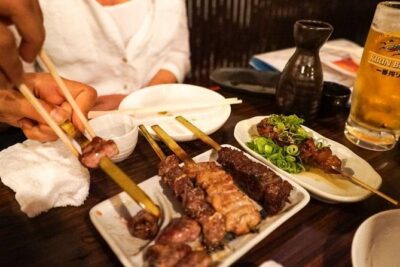
Osaka Bar Hopping Night Walking Tour in Namba (3 bars, 6 tastes)
Read our review →
Tokyo: Shinjuku Bar Hopping with All-You-Can-Drink & Dinner
Read our review →
Tokyo: Shinjuku Local Bar Hopping Walking Tour
Read our review →
Shibuya Meltdown Night Tour: All-You-Can-Drink Bar Hopping
Read our review →Browse the lists this tour appears in