
Review · TOKYO
Tokyo:Japanese pub Journey with University Students
The best part of this Shinjuku izakaya tour is the human connection. Instead of simply ordering food at a Japanese pub, you sit down with two English-speaking university students who explain how these places work and share their views on present-day Japan. The meal may include edamame, yakitori, gyoza, karaage, potato salad, tamagoyaki, and pickled vegetables, with local drinks to match.
I like the small group, limited to four participants, and I like that the students introduce you to food you might not choose on your own. The tour also works for non-drinkers, though anyone under 20 cannot join. The main consideration is the price: at $140 per person for two hours, you are paying mainly for conversation, guidance, and the social setting, not just for a pub meal.
Key points
- Two university students lead the evening, giving you a direct look at student life and current Japanese ideas.
- The meal is built around izakaya classics, including fried dishes, dashi rolled eggs, cold tofu, and small snacks.
- Beer, Japanese sake, and plum liqueur are included, while non-drinkers can still take part.
- The group is limited to four people, which gives you a better chance to ask questions and talk.
- The meeting point is beside Shinjuku Station, at the Shinjuku Police Station Shinjuku Station East Exit Police Box.
- Your restaurant bill is covered, and you can cancel up to 24 hours before the tour for a full refund.
Why an izakaya meal tells you more than a sightseeing stop
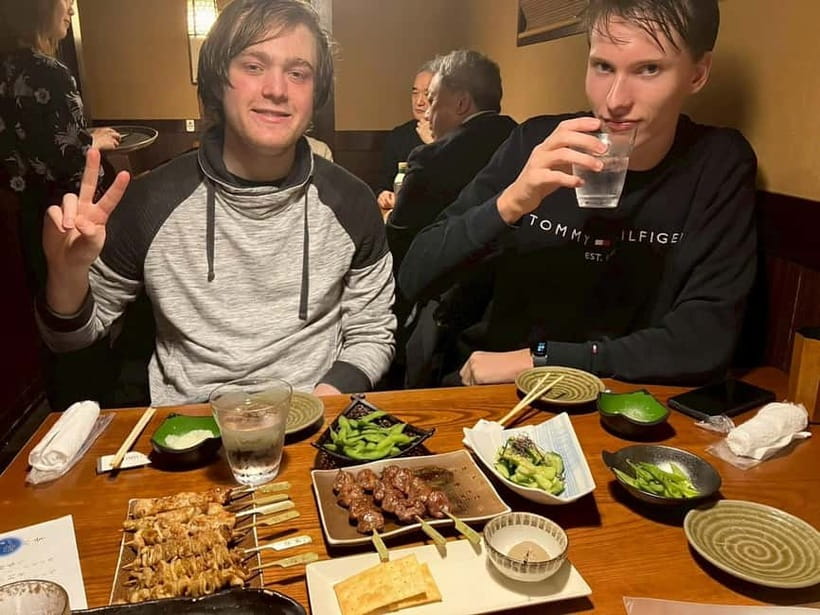
An izakaya is a Japanese pub where people order several small dishes to share while drinking and talking. It is not quite a restaurant, not quite a bar, and not usually a place for a single large main course. You order a spread, pass plates around, and let the meal take its own course.
That makes this experience useful for understanding everyday social life in Japan. Food is only one part of the evening. The real point is the way an izakaya helps people relax, close the distance, and get to know one another.
I like this approach because a standard sightseeing route can show you famous places without telling you much about how people spend an ordinary evening. Here, your guides can explain why certain dishes are common, how students use izakayas, and what life feels like for their generation.
The tone is meant to be social rather than formal. You are not joining a lecture about Japanese customs. You are sharing a table and asking questions as the food arrives. That can make the experience especially useful early in your Japan trip, when you want a friendly introduction to local dining customs.
More Pub Crawls in Tokyo:
- Tokyo Bar Hopping Tour in Shinjuku (All-You-Can-Drink + Dinner)
★ 5.0 · 3,587 reviews - Shibuya Meltdown Nightlife Tour: All-You-Can-Drink Bar Hopping
★ 5.0 · 1,058 reviews - Tokyo: Pub Crawl and Bar Tour
★ 4.5 · 951 reviews
Meeting two students near Shinjuku Station
The tour starts at the Shinjuku Police Station Shinjuku Station East Exit Police Box, written locally as 新宿警察署 新宿駅東口交番. Two university students wait at the meeting point and guide you from there.
This is a practical place to start because Shinjuku Station is a major transport center, but it can also be confusing. Give yourself time to find the correct East Exit area and the police box. The meeting point is specific, so look for the police box rather than waiting at a general station entrance.
The same location is used at the end of the tour. You do not need to find your way back from an unfamiliar part of Shinjuku after dinner. The activity lasts two hours, so the schedule is compact and easy to fit around other plans.
The exact izakaya may vary. The experience is designed around visits to local places rather than repeating the same tourist-oriented restaurant each time. That gives the evening a sense of discovery, but it also means you should not expect a fixed restaurant menu or identical route on every booking.
What you will eat at the izakaya
The food comes as a collection of small dishes. You might begin with edamame, cold tofu, potato salad, or oshinko, the Japanese term for pickled vegetables such as cucumber and carrot. These are simple foods, but they suit the setting because they are easy to share while conversation gets started.
You can also expect familiar izakaya favorites such as:
- Yakitori, grilled chicken pieces served on skewers
- Gyoza, Japanese-style dumplings
- Karaage, seasoned fried chicken
- Tamagoyaki, a rolled Japanese omelet
- Dashi rolled eggs
- Deep-fried dishes and other small snacks
The appeal is variety. You are not committing to one unfamiliar dish as your entire meal. You can try a bite, ask what it is, and move on to something else.
The menu may also include a house specialty found only at that particular restaurant. That is one reason I would avoid arriving with a strict idea of exactly what you will eat. The students recommend dishes, and you can tell them about foods you dislike when you meet.
This point matters if you have allergies, strong dislikes, or dietary limits. The information provided only says that disliked foods can be discussed at the meeting point. It does not promise a special allergy-safe or vegetarian menu, so you should explain your needs clearly before ordering.
Beer, sake, plum liqueur, and non-drinkers
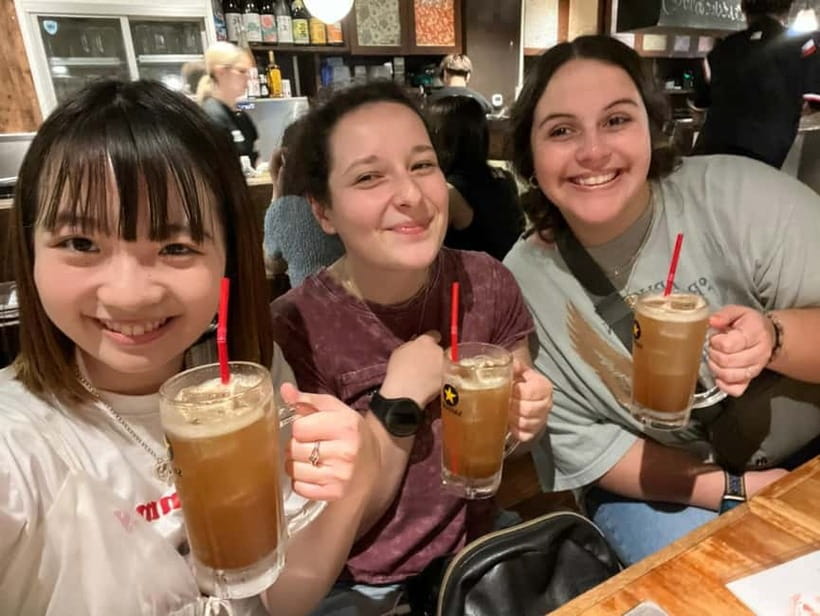
Included drinks are beer, Japanese sake, and plum liqueur. They fit the meal well and give you a chance to try several familiar Japanese pub choices without paying a separate bill for each one.
The experience is also described as suitable for non-drinkers. You can take part in the food, conversation, and cultural exchange without making alcohol the focus of your evening. The available details do not specify which nonalcoholic drinks are provided, so ask the guides what you can order if you do not drink.
The age rule is clear: people under 20 cannot join. Bring your passport, which is listed as the required item. That is particularly important if age verification is needed.
Since your restaurant bill is included, you do not have to work out shared costs at the end of the meal. That is convenient in a group setting, especially when dishes and drinks are ordered for the table.
Same night out, a different route:
- Tokyo: Shinjuku Bar Hopping with All-You-Can-Drink & Dinner
★ 4.9 · 440 reviews - 3-Hour Tokyo Pub Crawl Nightlife Welcome Guided Tour in Shibuya
★ 5.0 · 209 reviews - Tokyo: Shinjuku Local Bar Hopping Walking Tour
★ 5.0 · 186 reviews - Shibuya Meltdown Night Tour: All-You-Can-Drink Bar Hopping
★ 4.8 · 183 reviews
Conversation with Japanese university students
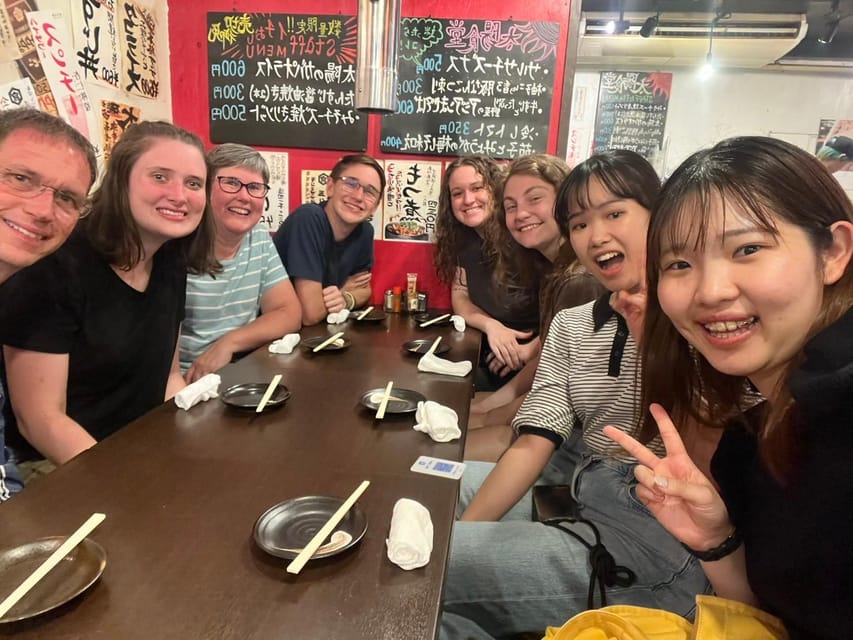
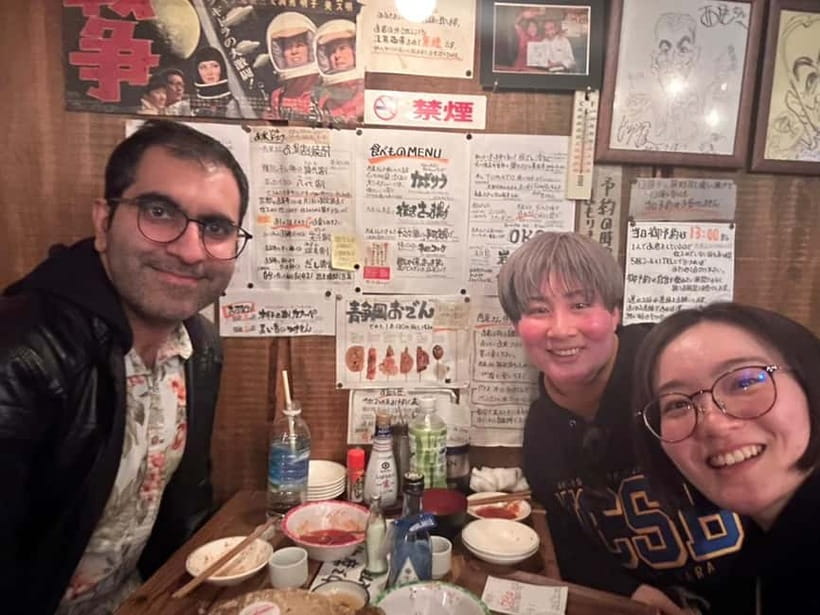
The guides are not presented as professional historians or restaurant specialists. Their value is different. They are English-speaking Japanese university students who can talk about their own daily lives, ideas, and experience of Japanese pub culture.
That personal angle is the strongest reason to book. If you want to understand what university life is like in Japan today, this gives you a chance to ask direct questions in a relaxed setting. You can discuss food, social habits, student concerns, and the differences between what visitors see and how young people actually live.
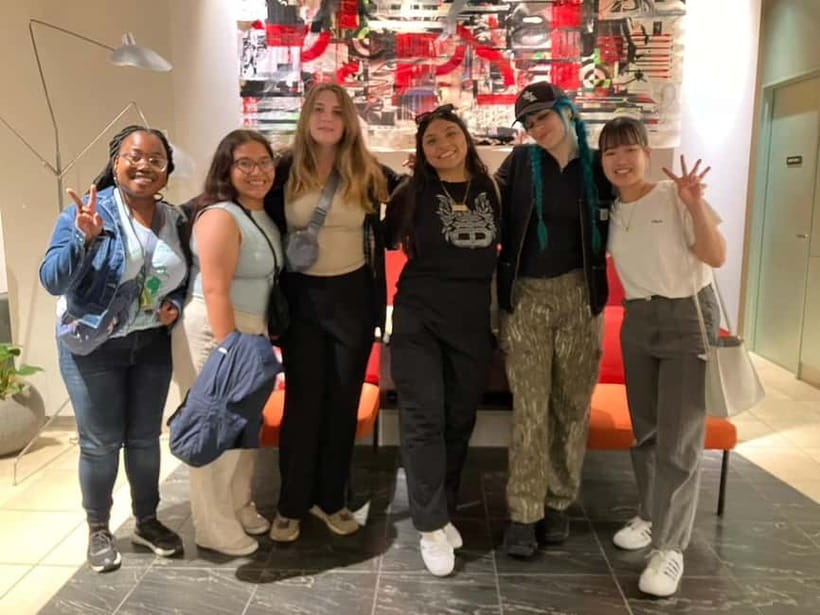
The small group size helps here. With a maximum of four participants, you have more room to speak than you would on a large food walk. You can ask follow-up questions and keep the conversation moving instead of listening to a guide address a crowd.
The available feedback highlights the students’ respectful manner and their ability to introduce foods that the diners would not have tried alone. That is a useful clue about the style of the evening. You should expect suggestions and explanations, not simply a guide pointing out menu items.
The guides’ names are not provided, so you should not book this expecting a particular named host. The students may vary, and so may the exact restaurant choices. For many people, that changing element is part of the appeal.
Why the four-person limit matters
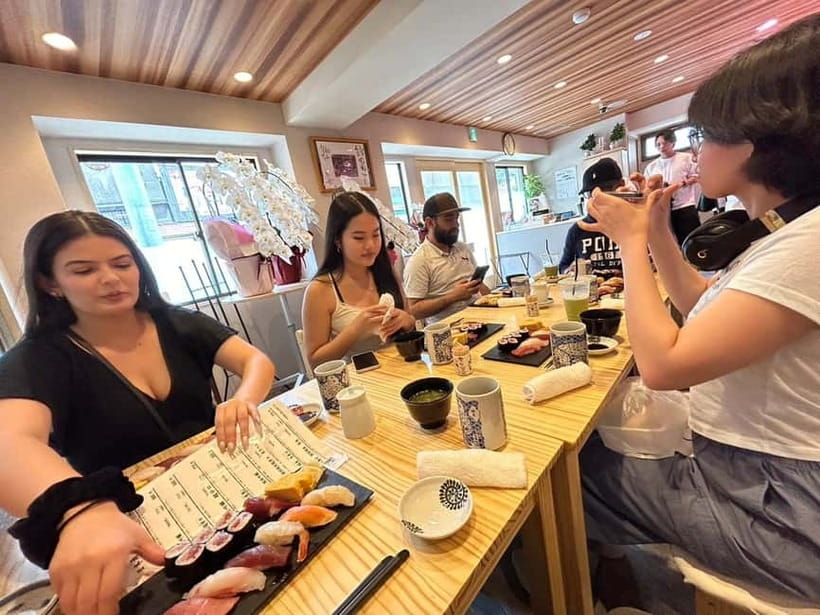
A group of four is small enough for real conversation. You are less likely to lose a question in background noise, and the students can respond to what interests you rather than following a rigid script.
This format may suit solo visitors, couples, or two friends who want a more personal introduction to Japan. It can also work for people who feel unsure about entering an izakaya alone. The students help with the setting and explain how to approach the food.
The limit is also a reason the price is higher than the cost of ordering an ordinary meal yourself. A solo diner could spend far less at a casual pub, but that would not include two English-speaking local guides, cultural explanation, or the chance to ask questions about student life.
You should think of the $140 as the cost of a hosted cultural meeting with food and drinks included. If your main goal is simply to eat inexpensive Japanese dishes, it is not the best value. If you want a direct exchange with young Japanese locals, the price becomes easier to justify.
How the two-hour route works
The evening begins at the East Exit police box, where the two university students meet you. From there, they take you to an izakaya in Shinjuku. The precise route and restaurant are not fixed in the information provided, so expect a local stop selected for the occasion rather than a named landmark.
Once seated, the students explain the izakaya style and help you choose or understand the food. Small dishes arrive for sharing, and the meal develops through conversation. You can try standard items, ask about unfamiliar choices, and tell the guides about anything you do not like.
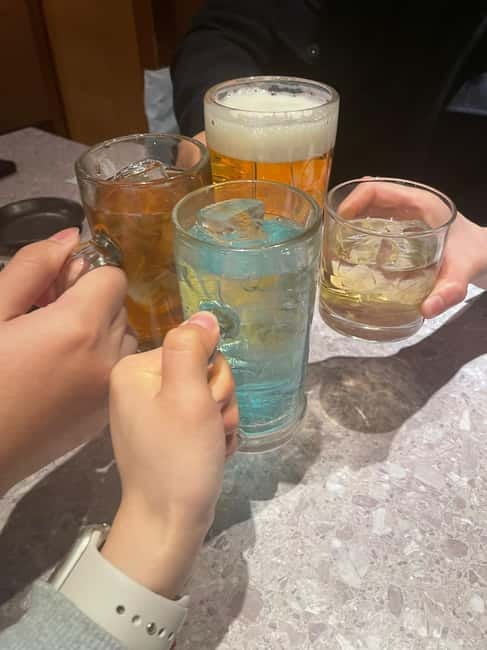
Drinks are part of the experience, with beer, sake, and plum liqueur included. Non-drinkers can still participate in the meal and discussion. The setting is intended to bring people closer together, so the social exchange matters as much as the menu.
After roughly two hours, the activity finishes back at the same meeting point. That makes it easier to plan a later evening activity in Shinjuku, though you should leave some flexibility if the meal or conversation runs close to the scheduled end.
Accessibility and practical planning
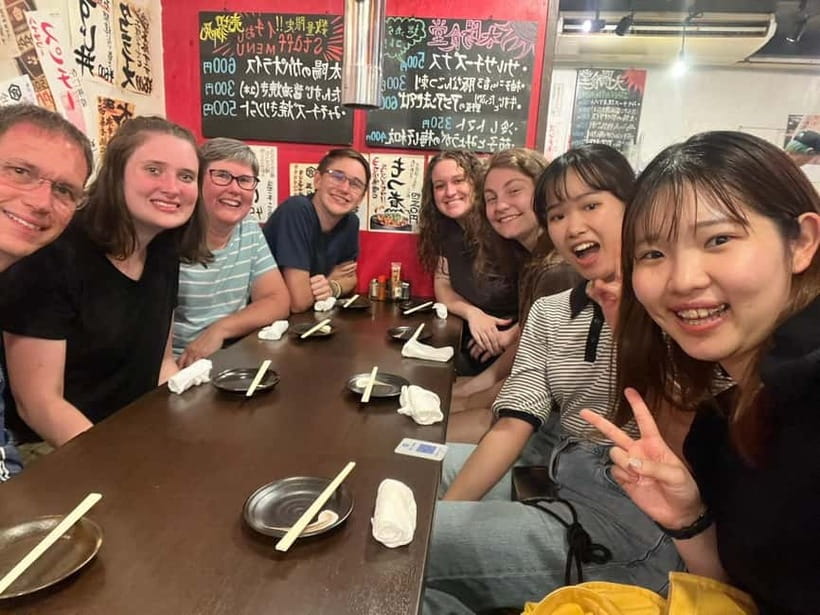
The activity is listed as wheelchair accessible. Since the specific izakaya can vary, you may want to confirm any personal access needs when booking or at the meeting point.
The tour is offered in English and Japanese. The student guides speak English, which lets you ask questions directly rather than relying only on translated signs or printed explanations.
You can reserve and pay later, so you do not need to pay at the time of booking. Cancellation is free up to 24 hours before the start for a full refund. Check the available starting times before planning the rest of your day, since the duration is fixed at two hours but the start time can vary.
Bring your passport. Also, tell the students about foods you do not like when you meet. That is the clearest opportunity to shape the meal around your preferences.
Who will get the most from this experience
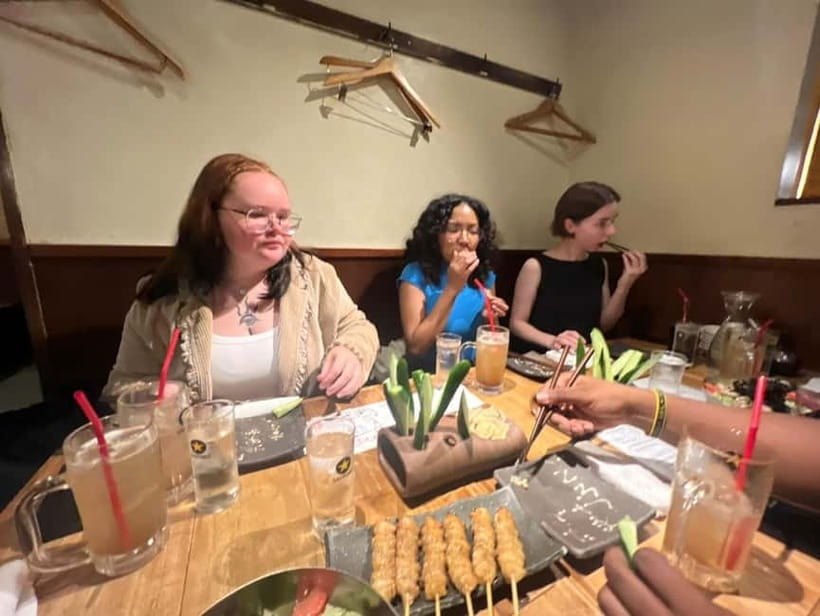
I would recommend this to you if you are curious about modern Japanese life and want more than a standard food stop. It is particularly useful if you are interested in university life, youth culture, everyday dining, and the way Japanese people socialize after work or school.
It also suits people who like trying food with a guide nearby. You can ask about a dish before tasting it, and you can receive suggestions instead of guessing from a menu.
Non-drinkers should not feel excluded. The food and conversation are central, and drinking alcohol is not required. Still, the evening takes place in a pub environment, so anyone seeking a completely alcohol-free setting may prefer another type of food activity.
I would be more cautious about recommending it to a very budget-focused diner. The included meal and drinks have value, but the price is driven by the small group and personal exchange. You are paying for access to a social experience that would be difficult to arrange by yourself.
Is the $140 price fair?
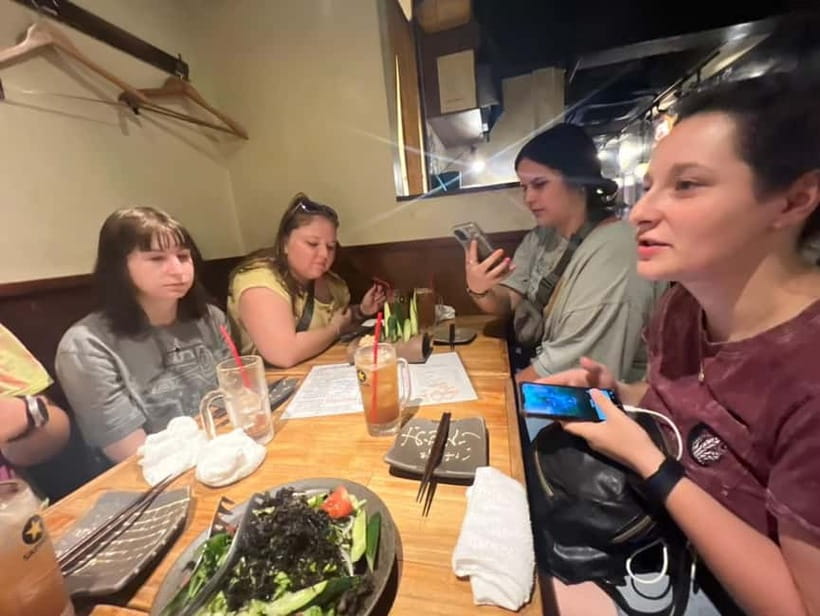
At $140 per person, this is not a cheap dinner. You could order several izakaya dishes for much less if you already knew where to go and felt comfortable handling the menu and customs on your own.
The calculation changes if you value the guides. The fee includes two university students, a small group capped at four, izakaya food, selected alcoholic drinks, and the full restaurant bill. You also avoid the uncertainty of choosing a restaurant without knowing what to order.
I see the price as fair for someone who wants a short, organized cultural exchange rather than a self-guided meal. The experience is strongest for first-time visitors who want context and conversation. Repeat Japan visitors who already know izakaya culture may find it less necessary unless meeting local students is the main goal.
Should you book this Shinjuku izakaya tour?
Book it if you want to talk with Japanese university students, sample several pub dishes, and see a more ordinary side of Japan than you usually find at major sightseeing stops. The respectful student hosts, small group, and willingness to recommend unfamiliar food are the main strengths.
Skip it if your priority is the lowest possible meal price, a fixed restaurant menu, or a long food crawl through several neighborhoods. You should also skip it if anyone in your party is under 20.
For the right person, this is a compact and personal evening in Shinjuku. You leave with more than a full stomach. You get a clearer sense of how an izakaya works, what young Japanese people think about their lives, and why shared food remains such a useful way to meet.
FAQ
Where does the tour start?
It starts at the Shinjuku Police Station Shinjuku Station East Exit Police Box, written as 新宿警察署 新宿駅東口交番.
Where does the tour finish?
The activity ends back at the same meeting point.
How long does the experience last?
The tour lasts two hours. Starting times depend on availability.
How many people can join?
The activity is limited to four participants.
Who leads the tour?
Two English-speaking Japanese university students wait at the meeting point and guide the experience.
What languages are available?
The live tour guide service is available in English and Japanese.
What food is included?
Included food may include deep-fried dishes, dashi rolled eggs, cold tofu, edamame, yakitori, gyoza, karaage, potato salad, tamagoyaki, and pickled vegetables.
What drinks are included?
Included izakaya drinks are beer, Japanese sake, and plum liqueur.
Can non-drinkers join?
Yes. The experience is suitable for both drinkers and non-drinkers.
Can people under 20 take part?
No. The activity is not suitable for people under 20 years old.
What should I bring?
Bring your passport.
Can I tell the guides about foods I dislike?
Yes. Tell the guides when you meet, and they will take your preferences into account when recommending food.
Is the restaurant bill included?
Yes. Your bill at the restaurant is included in the price.
Is the activity wheelchair accessible?
Yes. It is listed as wheelchair accessible.
Can I cancel for a refund?
You can cancel up to 24 hours in advance for a full refund.
Just added for a night out in Tokyo
- Tokyo:Shinjuku Ni-chome LGBTQ+ Bar Hopping Tour with Guide★ 5.0 · 2 reviews
- Tokyo: Shinjuku Nightlife Tour with Karaoke and Bar Hopping★ 4.1 · 4 reviews
- Tokyo: Shinjuku Izakaya and Golden Gai Bar Hopping Tour (2h)★ 4.9 · 67 reviews
- Tokyo: Shinjuku Golden Gai Bar Hopping Night Tour★ 4.4 · 8 reviews
- Tokyo: Shinjuku Golden Gai Bar Hopping that only locals know★ 5.0 · 5 reviews
- Tokyo Pub Crawl: Unique Japanese Drinks in Shimokitazawa★ 5.0 · 7 reviews
- Tokyo: Shibuya Bar-hopping Night tour★ 5.0 · 2 reviews
- Tokyo: Shinjuku Bar Hopping & Karaoke Night Tour★ 4.9 · 19 reviews
Tokyo Pub Crawls, compared.
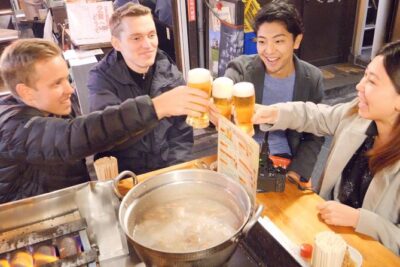
Tokyo Bar Hopping Tour in Shinjuku (All-You-Can-Drink + Dinner)
Read our review →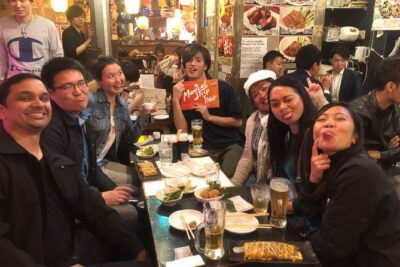
Shibuya Meltdown Nightlife Tour: All-You-Can-Drink Bar Hopping
Read our review →
Tokyo: Shinjuku Bar Hopping with All-You-Can-Drink & Dinner
Read our review →
3-Hour Tokyo Pub Crawl Nightlife Welcome Guided Tour in Shibuya
Read our review →
Tokyo: Shinjuku Local Bar Hopping Walking Tour
Read our review →
Shibuya Meltdown Night Tour: All-You-Can-Drink Bar Hopping
Read our review →
Shinjuku Izakaya and Golden Gai Bar Hopping Tour
Read our review →Browse the lists this tour appears in